
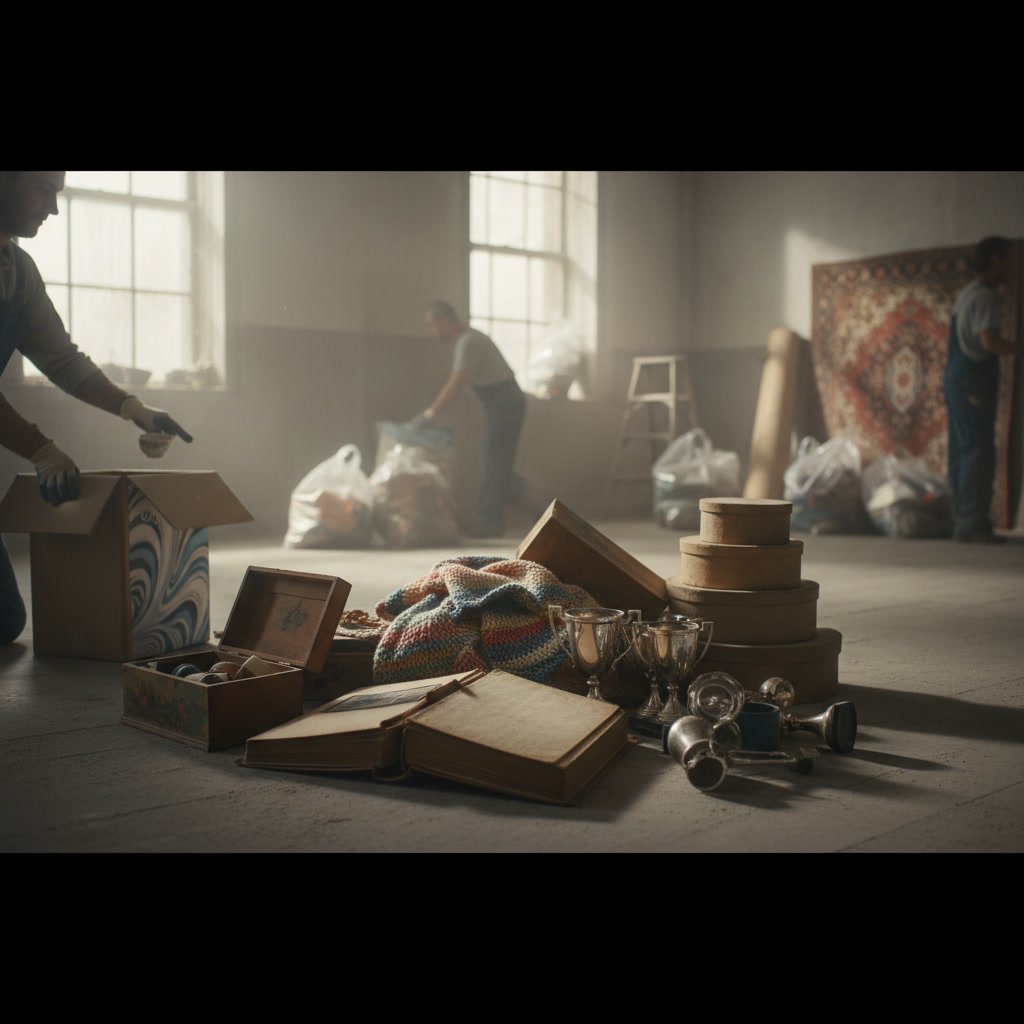
Deciding what to keep and what to let go of during a whole home cleanout becomes emotionally challenging when sentimental items junk removal enters the picture. The key is to identify items that truly carry meaning, photograph keepsakes you cannot store, and create a clear sorting system before the hauling team arrives. This approach honors your memories while making practical decisions about what stays and what goes.
Most people underestimate how much emotional weight everyday objects can carry. A coffee mug from a family vacation, your child’s first bicycle, or your grandmother’s cookbook can trigger powerful feelings that make decluttering feel overwhelming. The physical process of removing junk becomes complicated when every box contains potential memories.
Why Sentimental Items Make Cleanouts Harder
Objects become vessels for memory. When you hold your father’s old toolbox, you are not just holding metal and wood. You are holding every Saturday morning spent learning to fix things together. This connection makes it nearly impossible to toss items into a junk pile without careful thought.
Research shows that people attach emotions to objects as a way to preserve identity and connection to the past. During a major cleanout, you are forced to confront these attachments all at once instead of gradually over time. The volume of decisions required in a short window creates decision fatigue that clouds judgment.

Creating a Pre-Sorting System Before the Hauling Team Arrives
Professional haulers work efficiently, which means you need decisions made before trucks arrive. Set up four distinct zones in your home at least one week before your scheduled residential junk removal appointment: Keep, Donate, Photograph and Release, and Junk.
The Keep zone should be limited to items you will actually use or display within the next year. Be ruthlessly honest about whether you will frame that artwork, read those letters again, or repair that broken chair. If the answer is no, it belongs in a different category.
The Donate zone holds items in good condition that carry meaning but no longer serve you. Someone else can create new memories with your grandmother’s dishes or your children’s outgrown toys.
The Photograph and Release category is your secret weapon. Many items hold value only as memory triggers. A five-minute photo session preserves the memory while freeing up physical space. This works especially well for bulky items like furniture, old sports equipment, or decorative pieces that no longer fit your style.
The One-Year Rule for Marysville Homeowners
Here is a practical test that cuts through emotional fog: if you have not touched, used, or displayed an item in the past 12 months, and you have no concrete plan to use it in the next 12 months, it qualifies for removal. This rule applies even to sentimental objects.
The exception applies to archived items like photo albums, important documents, or heirloom pieces you are preserving for future generations. Everything else should earn its place in your home through active use or display.
How to Handle Inherited Items You Do Not Want
Guilt often surrounds inherited possessions. You feel obligated to keep your aunt’s china set even though you never use it and it takes up three kitchen cabinets. Permission to let go starts with understanding that honoring someone’s memory does not require keeping every object they owned.
Choose one or two meaningful pieces from an inheritance and release the rest. Keep the hand-carved jewelry box but donate the costume jewelry. Keep the handwritten cookbook but pass along the mismatched cookware. This selective approach preserves connection without sacrificing your living space.
Services like donation pickup services ensure these items find new homes where they will be appreciated rather than stored in boxes.

Step-by-Step Process for Sorting Childhood and Family Keepsakes
Children’s artwork, school projects, and toys create some of the toughest decisions. Follow this four-step process to manage these items systematically.
First, gather all similar items in one place. Collect every piece of childhood artwork, every trophy, every saved school paper. Seeing the full volume helps you understand the scope.
Second, select the top 10 percent. If you have 200 drawings, choose the 20 that best represent that period of life. If you have 15 participation trophies, keep the two or three that mark genuine achievements.
Third, digitize what you can. Photograph artwork, scan report cards, and create digital albums. Many scanning services can convert old slides, photos, and documents into easily stored digital files.
Fourth, create a memory box with strict size limits. A single storage bin per child or per decade of life forces you to curate rather than hoard. When the box fills up, you must remove something to add something new.
Working With Professional Teams During Emotional Cleanouts
Communication with your hauling crew prevents regrettable mistakes. Before the team begins loading, clearly mark your Keep zone with bright tape or signs. Place sentimental items you are still deciding about in a separate room entirely.
Professional services understand the emotional weight of estate and foreclosure cleanouts. Reputable companies work at your pace and check before removing anything questionable. If you feel rushed or pressured, that is a red flag.
Consider scheduling your cleanout in phases if the emotional burden feels too heavy. Remove obvious junk and furniture and large items removal first, then tackle sentimental areas in a second appointment after you have had time to sort.
What Professional Haulers Can and Cannot Help You Decide
Hauling professionals excel at logistics, heavy lifting, and responsible disposal. They can tell you whether furniture has resale value, which items donation centers accept, and how to safely remove large objects. Understanding what junk removal takes helps you plan which items qualify for standard service.
What haulers cannot do is make emotional decisions for you. They cannot tell you whether your mother’s wedding dress holds enough meaning to keep or whether your college textbooks deserve space in your garage. Those choices remain yours alone.
The best approach combines your decision-making with their execution. You sort and decide, they haul and dispose. This division of labor keeps the project moving while respecting the emotional complexity involved.
How Long to Allow for Sentimental Sorting
Rushing through emotional decisions leads to regret. Most homeowners need two to four weeks to properly sort sentimental items before a major cleanout. This timeline allows you to revisit decisions with fresh eyes and avoid snap judgments you will later question.
Break the work into 90-minute sessions. Decision fatigue sets in quickly when dealing with emotionally charged objects. Short, focused sessions maintain mental clarity better than marathon sorting days.
If you are preparing for property and apartment cleanouts with a firm deadline, work backward from your move-out date to ensure adequate sorting time. A typical three-bedroom home with decades of accumulated items requires 15 to 20 hours of active sorting time, not including the physical hauling.
When to Involve Family Members in Decisions
Shared family items create complicated dynamics. Before removing anything that belonged to multiple people or holds family significance, communicate with those who might have an interest.
Set a clear deadline for family members to claim items. Notify relatives at least four weeks before your cleanout date, specify exactly what items are available, and establish a pickup deadline. Anyone who misses the deadline forfeits their claim.
This boundary protects you from indefinite storage obligations while giving others a fair opportunity to preserve items meaningful to them. Document your communication to avoid future disputes.
Making Peace With Letting Go
Objects are not memories. The experiences, relationships, and moments that shaped your life exist independently of the physical items associated with them. Releasing an object does not erase what it represents.
Many people find closure through transition rituals. Thank an item for its service before releasing it, write a journal entry about what it meant to you, or take a final photograph. These small ceremonies acknowledge the emotional significance while creating permission to move forward.
Recognize that keeping everything preserves nothing. When every surface holds clutter and every closet overflows, nothing stands out as special. Curating your belongings elevates what remains and creates space to actually enjoy the items you choose to keep.
Your Next Steps Toward a Lighter, More Intentional Space
Start your sorting process today, even if your cleanout is weeks away. Early preparation reduces stress and improves decision quality. Identify your Keep zones, gather supplies for photographing items, and begin the emotional work of evaluating what truly matters.
Sno King Hauling Junk Removal understands that whole home cleanouts involve more than just removing junk. As a family-owned and veteran-owned business serving the community, we respect the emotional weight these projects carry and work at a pace that honors your needs. Whether you are downsizing, handling an estate transition, or simply reclaiming your space, our team provides the professional support and responsible disposal your project deserves. Call +14253226782 to discuss your timeline and how we can help you move forward with confidence.